Unique Romania Foods
The European Union protects 19 Romanian food and drink products,
recognized for their unique taste and characteristics.
These foods have been produced in specific geographical areas of Romania,
using the recognized know-how and traditions of local producers and ingredients from the region.
To help preserve cultural heritage and product authenticity,
the European Union awarded Protected Geographical Indication (PGI)
or Traditional Specialty Guaranteed (TSG) label to the following Romanian foods:
| Title | |
|---|---|
| Cathegory | Food Product |
| Meat products | dry cured salami, aged in mold (PGI), mutton and beef, thin, sausage (PGI), cleaver-chopped meat sausage (PGI), spicy, pressed, salami (PGI), brined, smoked and dried pork (PGI). |
| Cheese and Dairy |
Sibiu brined white cheese (PGI), Săveni semi-hard yellow cheese (PGI), Ibănești white cheese brined in natural saline solution (PGI), Teaca kneaded yellow cheese. |
| Fish |
Novac - smoked bighead carp, Smoked Danube river Mackerel , Pike-perch roe spread, Traditional carp roe dip (TSG), Marinated Black Sea sardines (TSG), Smoked sturgeon fillet. |
| Bread and Pastry |
Pecica sourdough bread (PGI), Dobrogeana cheese pie (PGI). |
| Fruit preserve/juice | Thick plum spread Topoloveni (PGI). |
| Drinks | Artisan beer Sadu. |
...
Meat products:
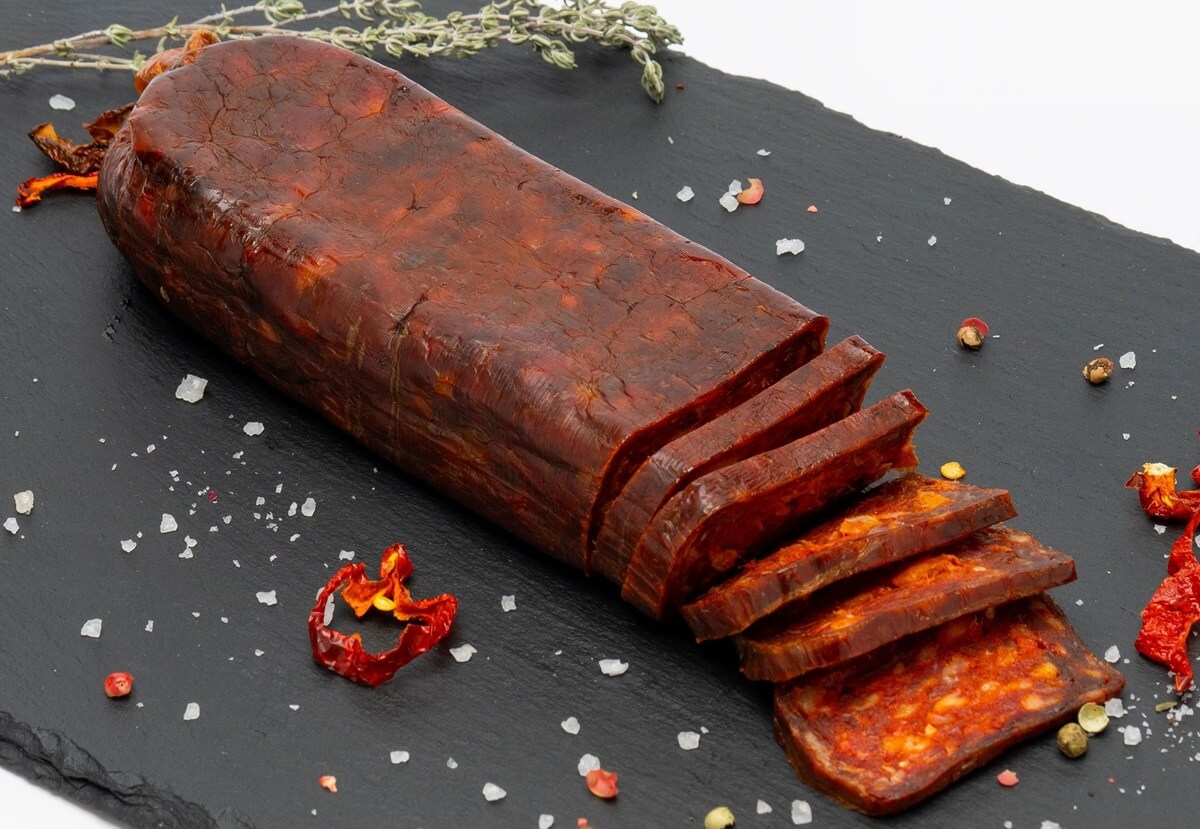
| Ingredients: | Cuts of pork: neck (Boston but), center loin, leg, belly. Turda salt mine natural brine, spices |
| Preparation: | brining in natural brine (7 to 21 days) spice mix rubbing (mustard, juniper, black pepper, bay leaves, garlic, allspice, cinnamon) smoking (beech wood), 5 to 7 days, dry aging in salt cave (20 to 28 days). |
| Provenance: | town of Turda, villages Mihai Viteazu, Tureni, Ploscoș |
Fish:
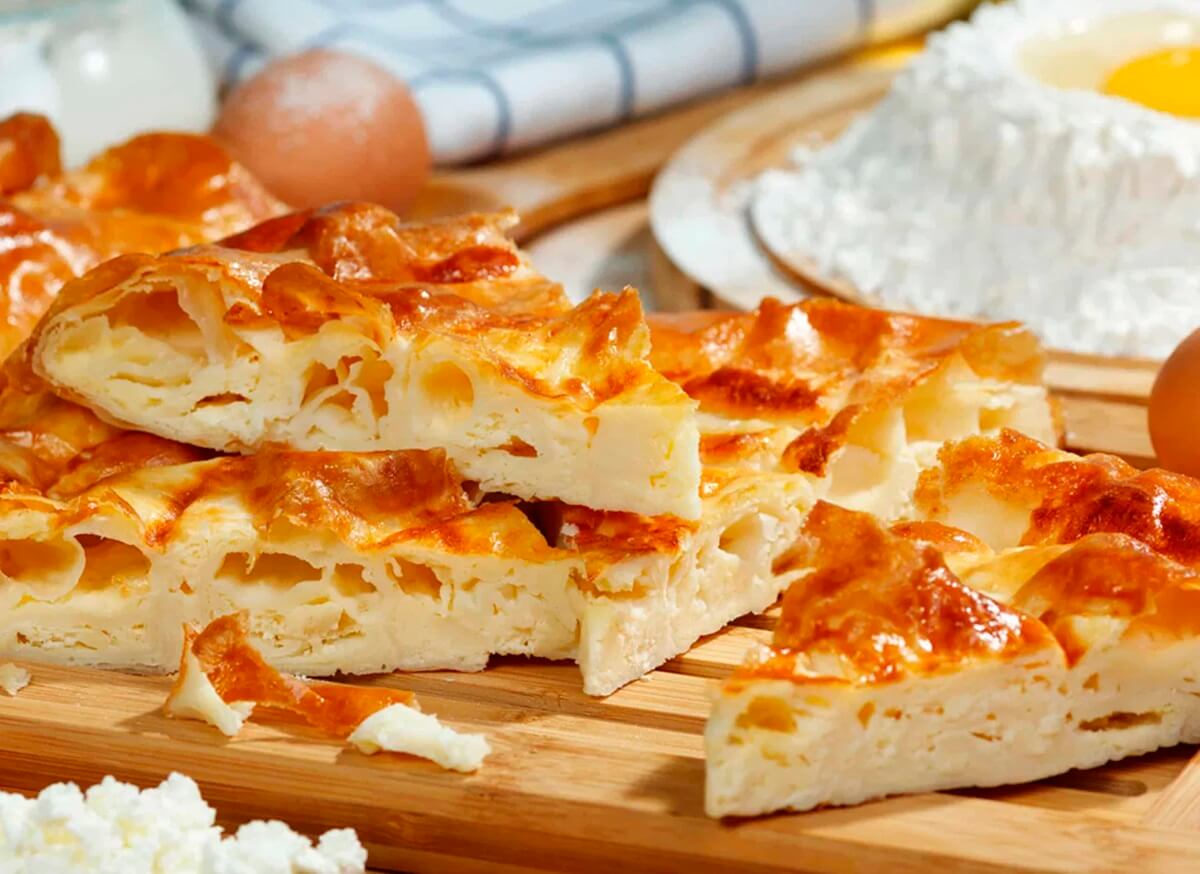
Bread and Pastry:
| Ingredients: | Pastry Dough (wheat flour, fresh yeast, vegetable oil, water, salt) brined white cheese (telemea), fresh white cheese (cas), eggs. |
| Preparation: | The pastry dough is stretched and dried until it becomes become very thin, translucent, elastic, and slightly shiny. Dough sheets are filled with cheese and, spiral-shaped and baked in round cake pans. |
| Provenance: | Dobrogea region (southeastern Romania) |
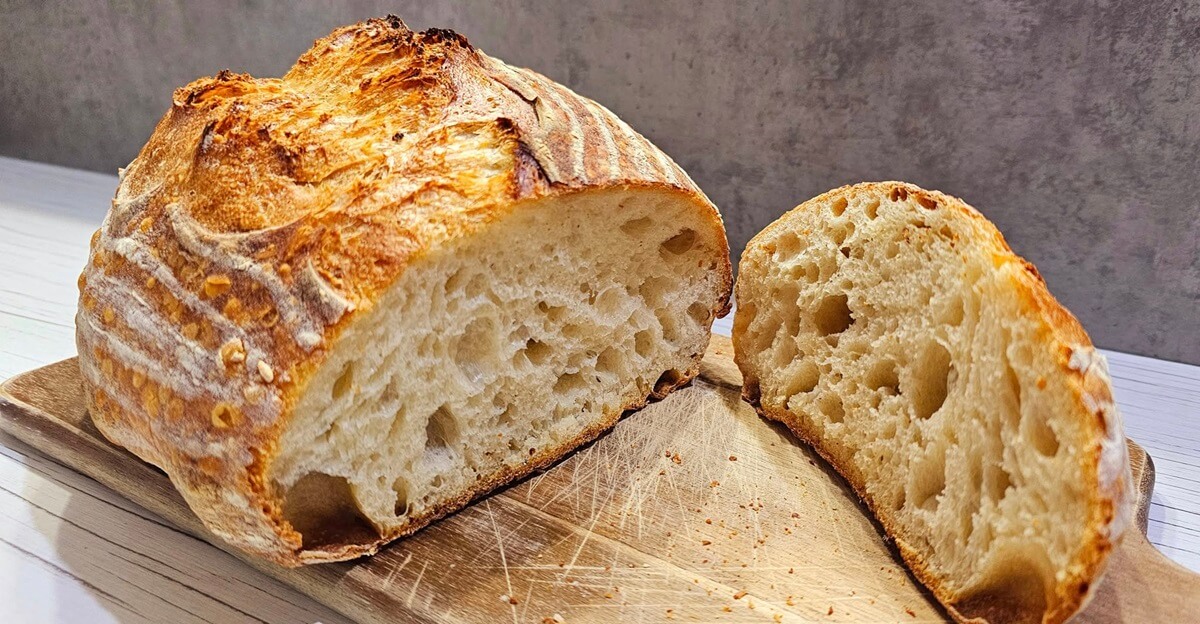
The slightly elongated round loaves of Pecica bread are made from fermented dough,
in town of Pecica, western Romania.
Texture is crispy and chewy and the crumb is yellowish-white, well-aerated, a little elastic with uniform air pockets.
Taste is sweet-salty, sweet from the carbohydrates in gluten - salty due to the added salt.
| Ingredients: | high gluten wheat flour, sourdough starter, fresh yeast, water and salt. |
| Preparation: |
ingredients quality check, mixing, dough kneading and fermenting, stretching and folding, shaping and proving, slashing, baking in earh oven (no open flame) and cooling. |
| Provenance: | town of Pecica (western Romania) |
Fruit preserve / juice:
Drinks:
The Geographical Indications established by the EU act as certifications that link specific food products to their place of origin and traditional methods of production.
Other tasty, unique foods - found or originated in Romania - include:
» Fir Bark aged Cheese » Pastrami » Chimney CakeCheese aged in fir three bark
Cow and sheep's milk aged in fir tree bark
(Brânză de burduf in coajă de brad)
Cheese and tree bark don't seem like a natural fit. But this specialty of southeast Transylvania,
especially in the towns and villages that include Moeciu and Fundata, may go as far back as the 14th century.
Dairy farmers needed a way to store the surplus cheese, and the local evergreen forests provided the perfect vehicle.
After all, woody bark provides wonderful protection for trees.
Strip the bark from a fir tree, wrap it around the cheese and presto:
the dairy product remains moist and preserved from the elements.
Continue reading about cheese aged in fir three bark.
The origin of Pastrami
Little Romania in lower Manhattan was a neighborhood within a neighborhood, tucked into the blocks bound
by East Houston Street, Allen Street, Grand Street, and the Bowery.
When the Romanian-born writer Marcus Ravage arrived in New York in 1900, he found the area thriving;
restaurants had opened everywhere, he recalled in a memoir, and the first Romanian delicatessens
were displaying "goose-pastrama and kegs of ripe olives and tubs of salted vine-leaves".
"Goose-pastrama" was the starting point for American pastrami.
The Jewish immigrants who settled in Little Romania brought with them a traditional technique for preserving goose
by salting, seasoning, and smoking the meat. In America, however, beef was cheaper and more widely available than goose,
so pastrama was made with beef brisket instead.
(Other sources, including SeriousEats,
suggest that Romanians were making 'pastirma' from all sorts of different meats back in the old country, primarily beef.
Trade journals from the 1850s indicate that Romania was exporting "pastroma or pastirma" from Brăila,
one of the primary ports on the Danube River, by the mid-19th century, if not earlier.
In his 1878 Dictionary of Commercial Information, Edward T. Blakely described the preparation as
"ox, sheep, or goat's flesh salted, with garlic and spices, and dried in the sun for winter food.")
Later the name became pastrami — perhaps because it rhymed with "salami" and was sold in the same delicatessens.
By the time Little Romania dispersed in the 1940s, New Yorkers from every ethnic background
were claiming expertly sliced pastrami as their rightful heritage.
(Iconic Foods, Lunch Hour NYC - New York Public Library)
In several regions in Romania, smoking and/or frying the meat have been used for centuries to preserve meat. A little less common than smoking, confiting pork meat is still popular, especially in rural communities.
The recipe is simple: pork meat and home-made sausages are slowly fried in a cauldron in their own fat. The fried meat/sausage is left to rest, then placed in a garniță (a large enamel pot). Hot lard is poured over the meat to cover the contents of the pot. The layer of solidified fat acts as a perfect airtight seal, creating an anaerobic environment, where no bacteria can reach.
The lard not only preserves the meat, but also matures it. During the months spent in the garniță, the fibers soften and the meat becomes tender. Although today refrigeration and freezing are widely available, many Romanians still prepare their own pork confit Carne la Garniță.
Transylvanian Treats: One Sweet "Cylinder"
A long rope of sweet yeast dough is tightly wrapped in a spiral around a wooden cylinder and dusted with sugar.
It is then baked, slowly turning, on a rotating spit above an open flame. Carefully edged off its wooden
mold after baking, each chimney cake is a whimsical-looking, soft bread with an addictively crunchy caramelized sugar crust and an airy
open center.
The chimney cake (kurtoskalacs) was just a provincial treat until after the fall of Communism,
when entrepreneurs began opening city shops in Romania and elsewhere in Europe.
These "tubular" treats that look like giant empty cannoli come 'old-fashioned' (sugar-dusted) as well as in several variations:
cinnamon, crushed walnuts, chocolate shavings. They are best eaten, fresh, by breaking off pieces.
Media articles on chimney cake:
Saveur.com and
NYTimes.com
Dinner etiquette: Nicolae Ceaușescu notoriously avoided eating food that was not properly screened.
(Source: Dictators’ Dinners - A Guide to Entertaining Tyrants, Britannica)
...